A laptop gets stolen, an external drive is left in a car, an old disk goes to a repair shop or into the trash. If the data isn’t encrypted, anyone who connects the drive to another computer reads every file. A Windows password protects signing in, not the disk.
- System partition (C:): BitLocker, Device Encryption or VeraCrypt. Cryptic Disk can't encrypt it.
- Data partitions, external drives, USB sticks: Cryptic Disk encrypts them in an 8-step wizard.
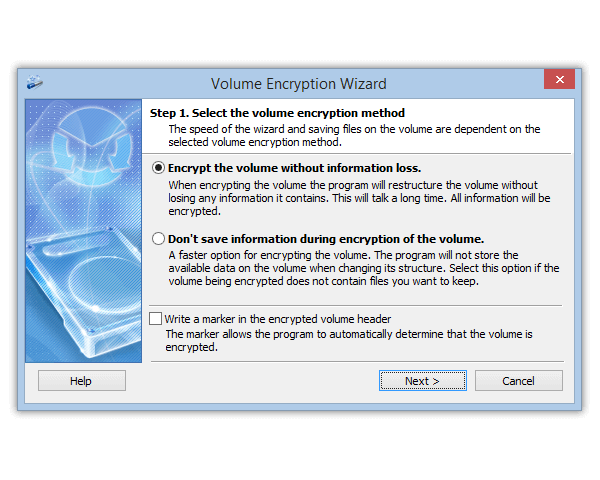
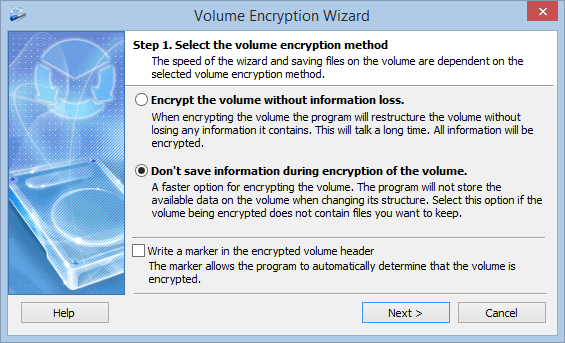
- Two methods: fast with formatting (erases the partition) or without information loss (keeps files, takes hours).
- Save a header backup. A forgotten only password can't be recovered.
Why encrypt a drive
An encrypted partition can’t be read without the password. Once mounted, it works like any other disk: files are encrypted on write and decrypted on read.
- Loss or theft
- A laptop seized or sent for repair
- A disk sold or thrown away
- Against malware running while the drive is mounted
- It doesn't replace backups
System partition, data partition or external drive
Decide first what you want to encrypt: the tools differ.
Cryptic Disk runs on Windows 11, 10, 8.1, 8, 7, Vista and XP. There are no versions for macOS, Linux, Android or iOS.
Preparation: make a backup
Copy everything important to another drive: it protects you from a power failure or hardware fault during encryption and lets you use the fast method with formatting. Close programs that use files on the partition.
Two methods: with formatting or without information loss
Don't shut down the PC or unplug the drive while the wizard works. Back up anyway.
Step by step: encrypt a partition with Cryptic Disk
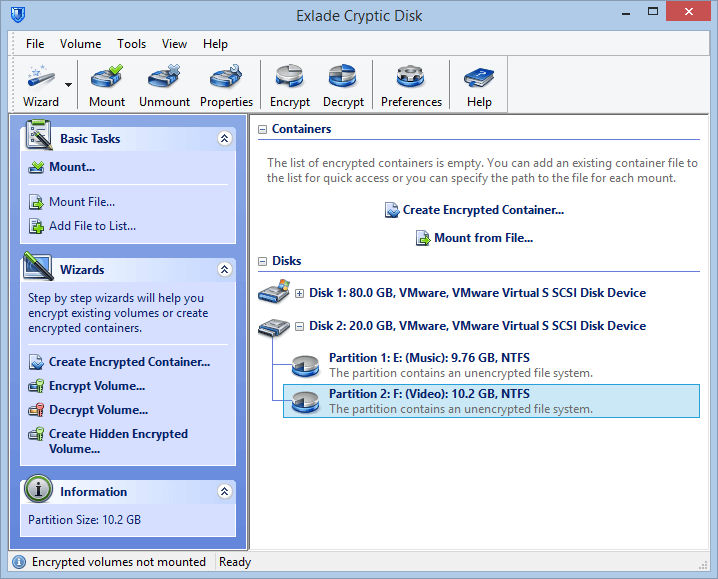
Download Cryptic Disk, install and start it. The main window lists your disks and partitions.
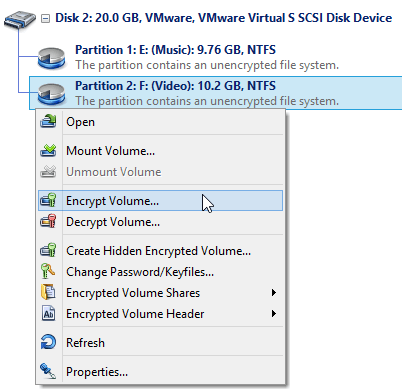
Right-click the partition and choose "Encrypt Volume..." in the context menu.
Pick one of the two methods above. Leave the marker option at the bottom off (see below).
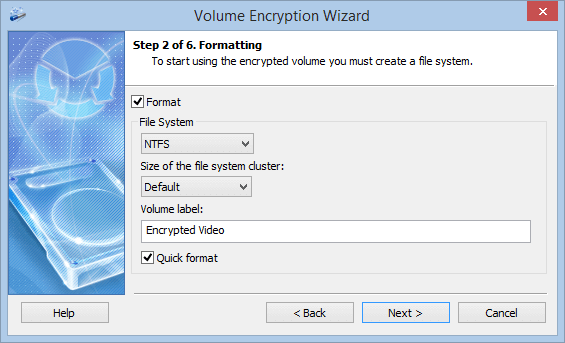
Only for the method with formatting (otherwise this page is skipped): file system, cluster size and volume label, the name in File Explorer.
- "Quick format" only writes a new file system, so it finishes much faster, but the old data stays readable in the unused sectors of the disk. On a disk that held files before, turn quick format off.
- NTFS for an internal partition, exFAT for a drive you also plug into other PCs.
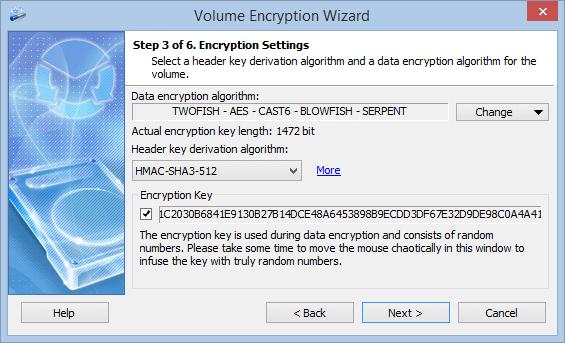
Leave the defaults and click "Next", or click "Change ..." for another algorithm or a cascade: AES, Serpent, Twofish, Blowfish and CAST6 in XTS mode (cryptography details).
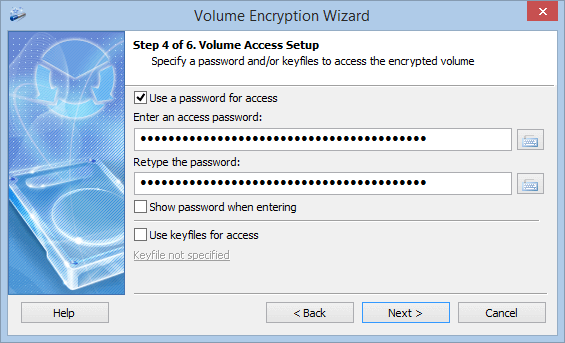
Set the password and, optionally, key files: then the drive opens only with both. Against keyloggers, use the built-in virtual keyboard. You'll enter the password at every mount.
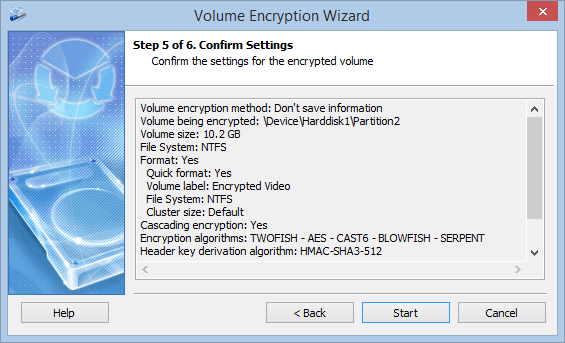
Check the summary and click "Start".
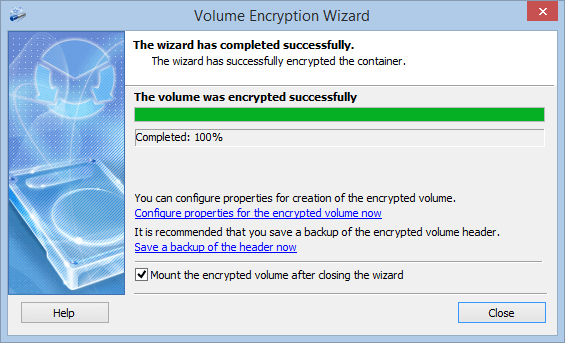
Click "Save a backup of the header now" and store the file away from this drive (see below). Leave "Mount the encrypted volume after closing the wizard" ticked and close.
The marker option: leave it off
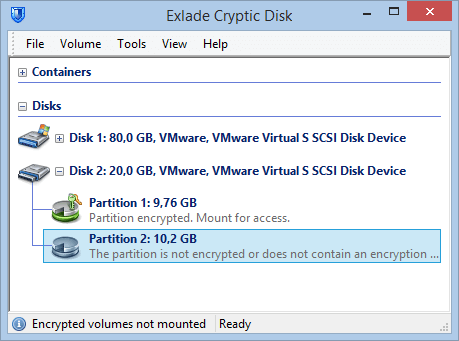
The option “Write a marker in the encrypted volume header” on the first wizard page is off by default. Keep it off: without the marker, nobody can prove without the password that the partition holds encrypted data, it looks like random bytes. Even Cryptic Disk shows it as not encrypted until you mount it with the right password. The marker only lets the program show the partition as encrypted; it doesn’t change the protection.
More on the drive encryption page; to hide data even under pressure, see hidden volumes.
Mounting and unmounting
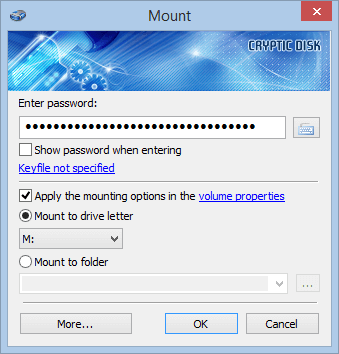
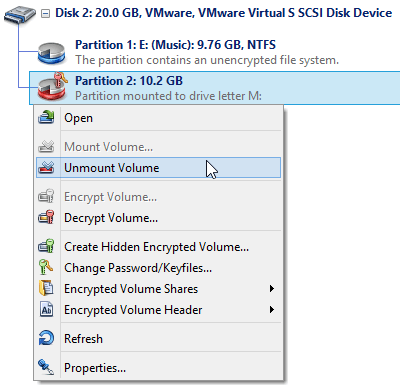
Select the partition in the main window, mount it, enter the password, pick a free drive letter and click "OK".
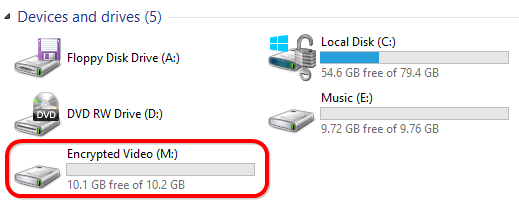
The drive appears in File Explorer under that letter. Copy, edit and delete files as usual; on the disk the data stays encrypted.
In the main window, from the tray icon menu or with a hot key. When Windows shuts down, drives are unmounted automatically.
- Program settings: auto-unmount on log off, in power saving mode or after inactivity.
- The volume's "Properties...": hot keys, programs or scripts on mount and unmount.
Windows offers to format the drive? Always say no. Windows doesn't recognize a file system on an unmounted encrypted partition, and formatting destroys the encrypted data.
Back up the volume header
The encryption key is in the volume header. If a disk error damages it, the data can’t be read without a copy. Save one at the end of the wizard or later: “Encrypted Volume Header” in the volume’s context menu saves or restores it.
- If the header is damaged
- If you changed the password and forgot the new one: restore the old header, open with the old password
- If you forget your only password: the data is lost, there is no back door
- Without the password valid when you saved it: remember that one too
Keep the backup file on another drive, not on the encrypted one.
Choosing a password
The password is the weakest point of any encryption. Cryptic Disk deliberately slows down key derivation (PBKDF2) so each guess takes time, but a short or common password can still be guessed. Use several random words, at least 15 characters if it’s your only protection, and don’t reuse it. See how long a password should be in 2026.
FAQ
Does encryption slow down the drive?
Usually not noticeably: data is encrypted in memory on the fly, and modern processors accelerate AES in hardware. Only the initial encryption without information loss takes long, once.
Can I encrypt the C: drive with Cryptic Disk?
No. Use BitLocker, Device Encryption or VeraCrypt for the system partition, Cryptic Disk for data partitions and external drives. See encryption software for Windows.
What if I forget the password?
If you changed it and forgot the new one, an earlier header backup opens the drive with the old password. If you forget the only password, nobody can recover the data, including us.
How do I encrypt an external hard drive or a USB stick?
The same way: select its partition and run the wizard. See encrypting an external hard drive for backups and password protecting a USB flash drive.
30-day free trial with no limitations. Start with a test partition or an external drive you've backed up.
Free Trial Pricing & Buy