Some fear a thief or a curious repair technician could open their encrypted drive. Others lost a password and hope a program can recover their files. The answer is the same for both: modern encryption such as AES-256 is not broken by trying every key.
- AES-256 itself holds: trying all keys is out of reach, even for quantum computers.
- What breaks: a guessable password, a key leaked from memory or the cloud, an outdated format, a bug.
- Forgot your own strong password? No program can work it out. A recovery key helps if you saved one (BitLocker). A header backup works only with the old password you still remember.
- Practically uncrackable: a long passphrase, key files, auto-unmount, no plaintext copies.
Why nobody brute-forces AES-256
An AES-256 key is 256 random bits: 2^256 possible keys, a number with 78 digits.
A rough estimate: if every person on Earth had a billion computers, each testing a billion billion keys per second, trying all keys would still take more than a trillion trillion times the age of the universe.
Even AES-128 is out of reach. On quantum computers, Grover's algorithm in theory roughly halves the effective key length, leaving AES-256 about 128 bits of security: still far beyond any realistic attack.
Cryptic Disk uses AES, Serpent, Twofish and other algorithms in XTS mode and can chain several in a cascade (see cryptography). But nobody attacks the algorithm. Attackers look for the weak points below.
What actually breaks encryption
Summer2026!. Weak passwords and key derivation
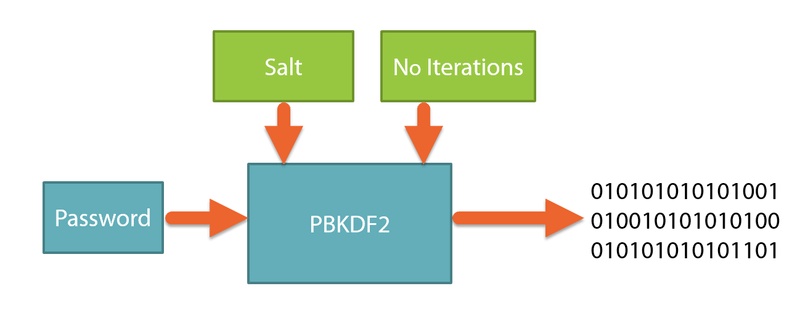
Guessing speed depends on key derivation, the step that turns a password into a key. With one fast hash, a single graphics card checks billions of guesses per second, so good software makes this step slow on purpose:
- PBKDF2 repeats a hash many thousands of times with a random salt. In Cryptic Disk it deliberately takes 1 to 10 seconds: you wait once when mounting, an attacker pays that price for every guess.
- Argon2 (winner of the 2015 Password Hashing Competition, standardized as RFC 9106) also needs a lot of memory, which takes away much of the advantage of graphics cards.
Slow derivation still doesn’t rescue a bad password. A rough estimate at a million guesses per second (an attacker with a lot of hardware):
| Password | Time to guess |
|---|---|
| From a leak list | minutes |
| Five random words from a list of 7,776 | hundreds of thousands of years on average |
Sleep mode, cloud keys and old formats
- Sleep is not off. A sleeping laptop with a mounted drive is not protected like a switched-off one. BitLocker asks no PIN on wake-up from sleep, so for high-risk situations Microsoft recommends hibernation or shutdown.
- Know where your keys are. Set up Windows 11 with a Microsoft account, and Device Encryption turns on where the hardware supports it, with the recovery key attached to that account. BitLocker also offers to save its key there. In Cryptic Disk, the key backup (header backup) is a file you save and keep yourself.
- Pick modern formats. 7-Zip still uses ZipCrypto by default for .zip: choose AES-256 or use .7z. Newer Office formats (.docx, .xlsx) use AES with slow key derivation.
Ransomware decryptors are a different story
Many searches for “decryption software” come from ransomware victims: criminals encrypted the files and hold the key. A free decryptor exists only if researchers found a flaw in that ransomware family or police seized its keys. No More Ransom (started in 2016 by the Dutch police, Europol and security companies) collects such tools for free and says plainly that not every ransomware has one.
Avoid paid "universal decryptors" from unknown sites: they can't deliver and are often malware themselves.
Forgot your own password? An honest answer
No program can work out a forgotten password from strong encryption: that's exactly what encryption prevents. Services promising to "decrypt any AES drive" just try weak passwords or want your money.
What really helps:
How to make your encryption practically uncrackable
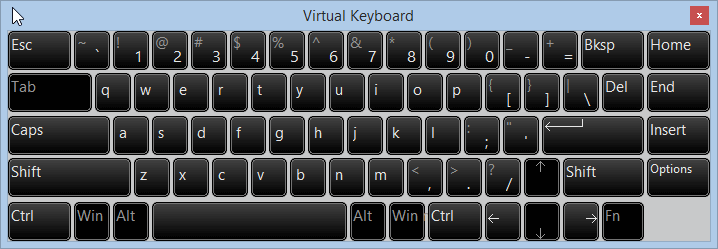
Five or six random words, at least 15 characters if the password is your only protection, used nowhere else. See how long a password should be.
Then a guessed or overheard password isn't enough. Keep them away from the drive and back them up: a lost key file locks you out too.
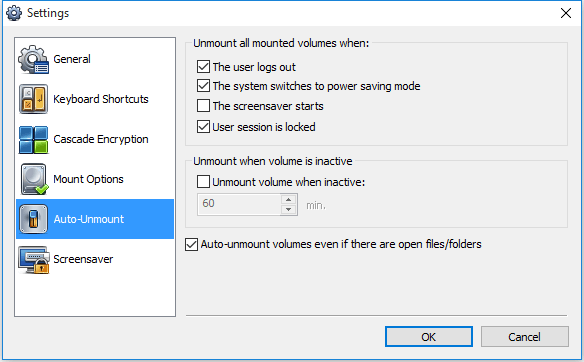
On the "Auto-Unmount" page of the Cryptic Disk settings, check "User session is locked" and "The system switches to power saving mode". Shut down or hibernate the laptop when you leave it.
Not in Downloads, email attachments or a cloud folder. A file merely deleted from an unencrypted drive can often be recovered, so save sensitive files straight to the encrypted drive.
Against data loss, not attackers: a damaged header without a copy means unreadable data. Keep it apart from the drive.
The step-by-step guide to encrypting a drive walks you through the wizard.
FAQ
Can the police or the FBI crack AES-256?
No publicly known way breaks AES-256 itself. Investigators use the same weak points: guessable passwords, recovery keys in the cloud, devices seized unlocked or asleep.
Is there a free decryption program that opens any encrypted file?
No. There are tools for weak formats (ZipCrypto, Office 97-2003) and free decryptors for some ransomware families (see No More Ransom). A drive properly encrypted with a strong password opens only with that password or a recovery key.
How long does it take to crack an encrypted drive?
It depends on the password, not the algorithm. A leaked password or a word plus a year can fall quickly even with slow key derivation; five or six random words make guessing impractical with any hardware available today.
No limitations during the trial. Windows 11, 10, 8.1, 8, 7, Vista and XP.
Free Trial Pricing & Buy